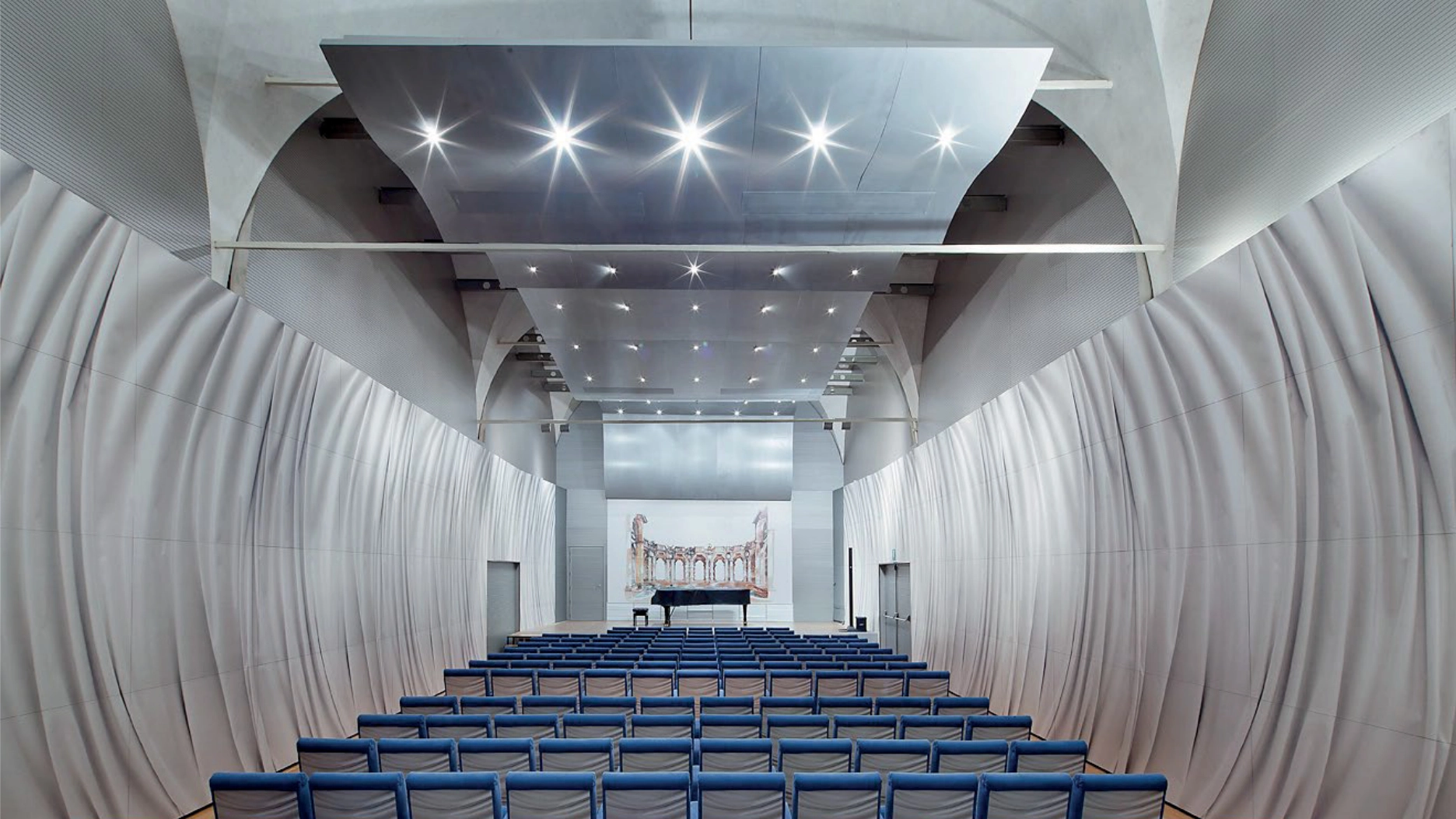
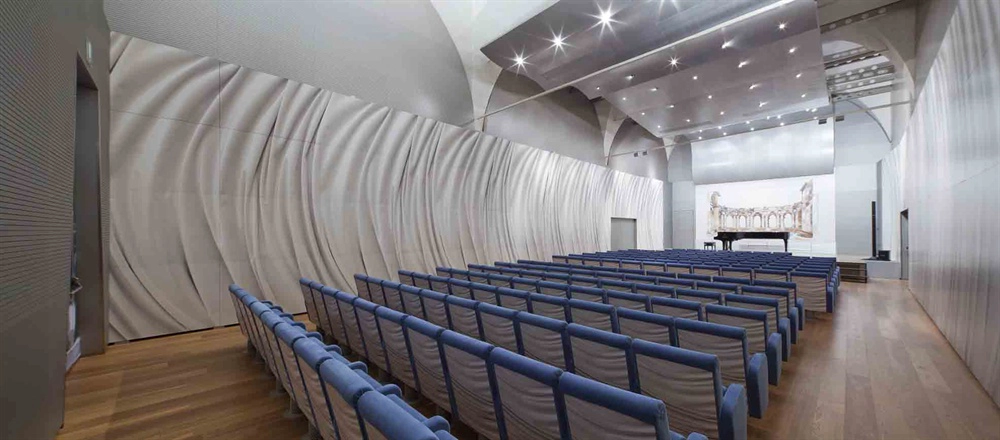
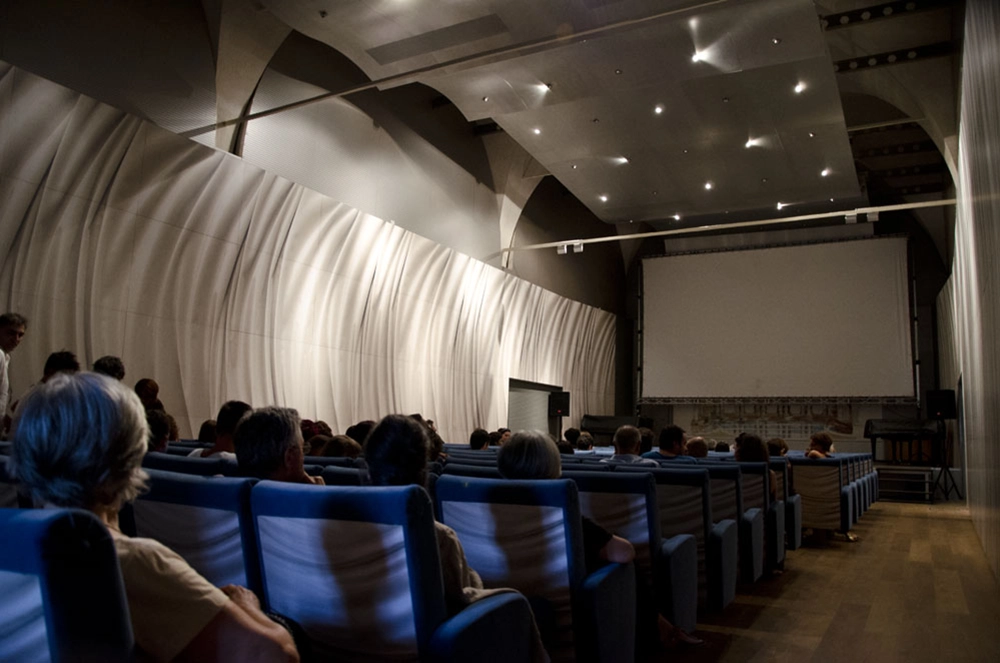
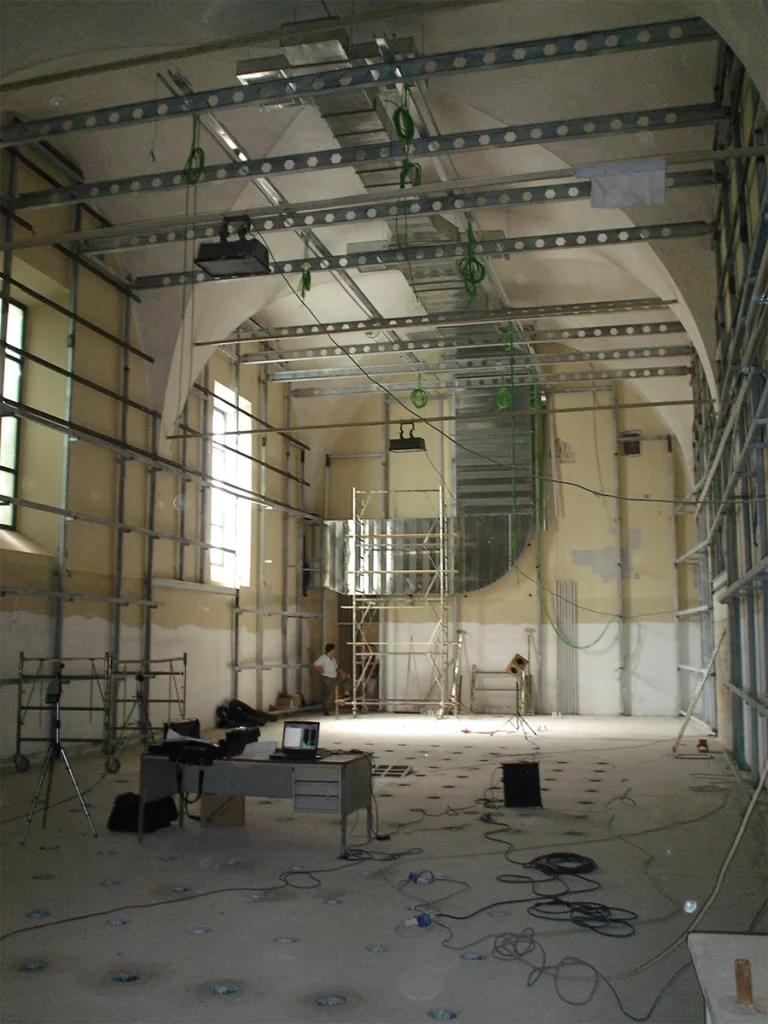
The concert hall, with a seating capacity of 175 and 25 orchestral seats on stage, was conceived as a “soft” parlour for optimal music listening.
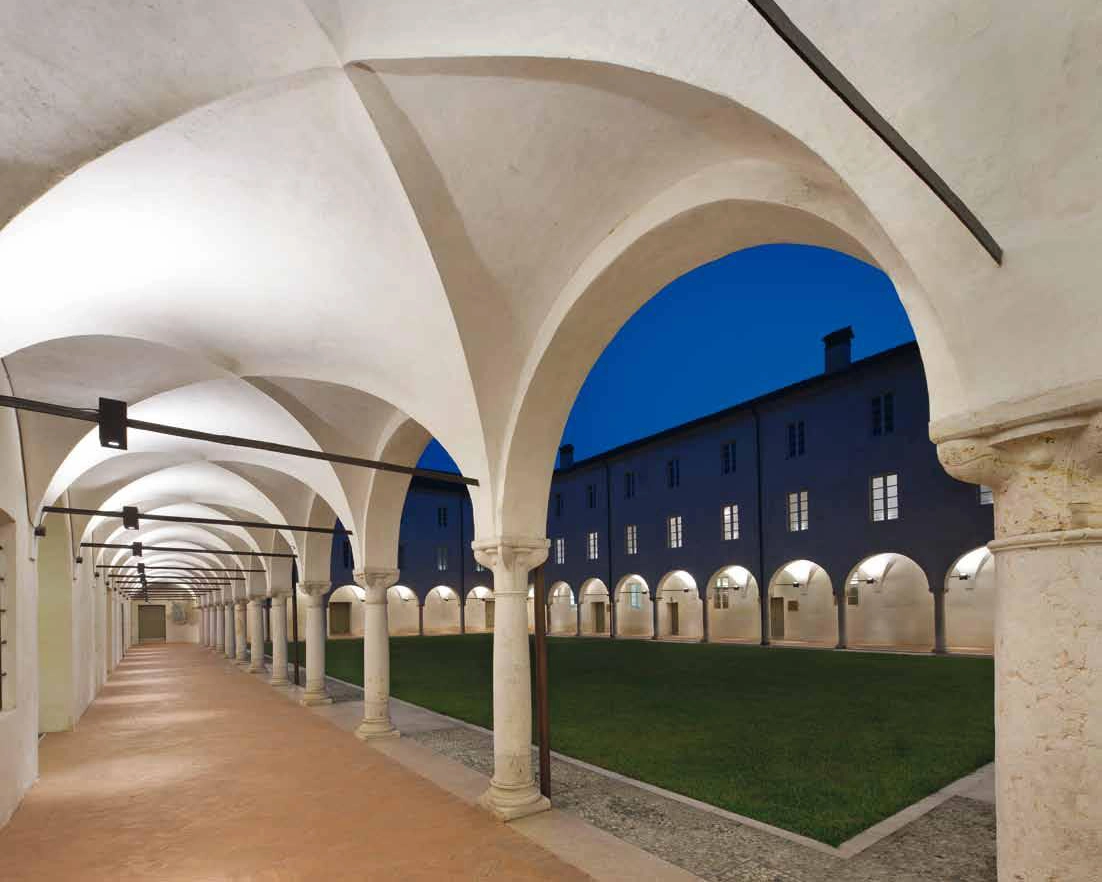
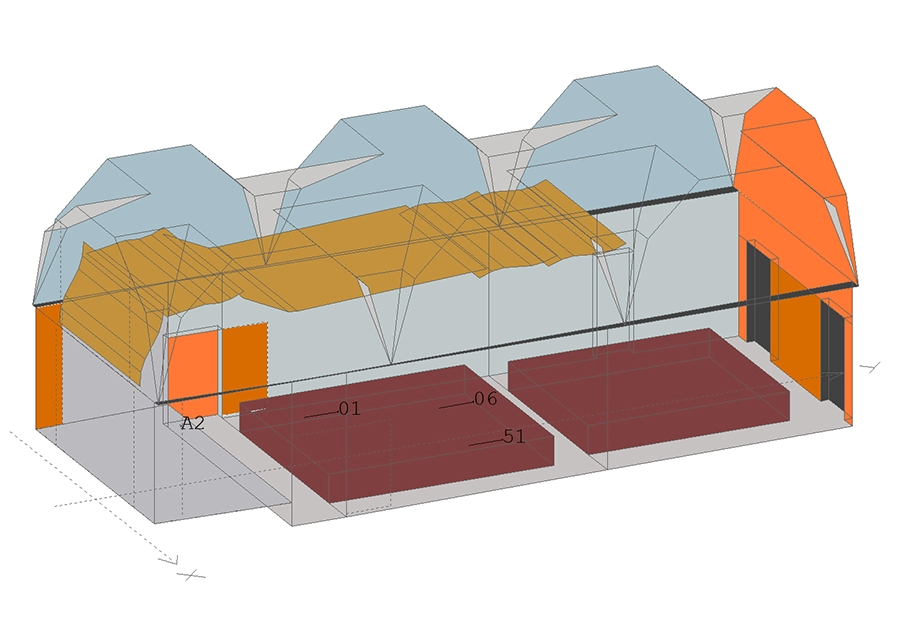
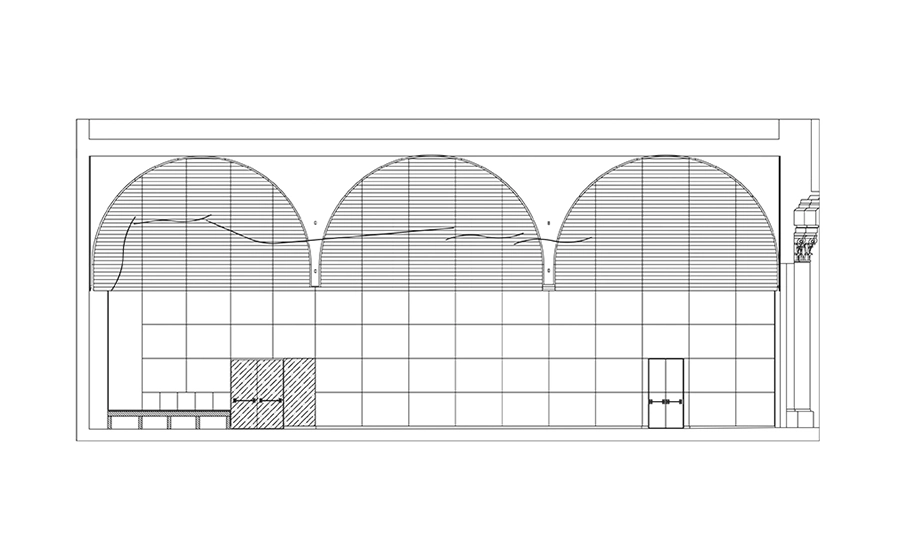
In alignment with the architectural vision and the conservation aims expressed by the Superintendency, the transformation of the monastery’s two historic churches into a concert hall involved the implementation of a ‘second skin’ covering part of the interior surfaces. This allowed the original volume, closed at the top by cross vaults, to be both visually appreciated and acoustically perceived. Furthermore, the acoustic finishes are supported by an independent load-bearing grid, which does not contaminate the historic walls and guarantees the reversibility of the intervention.
Virtual acoustic modelling was instrumental in the design and optimisation of the large suspended canopy, which is responsible for evenly distributing sound energy to the audience. The wall cladding, made from an innovative material that yielded outstanding acoustic and aesthetic results, has been designed to ensure a consistent look while concealing the use of materials with different acoustic properties.
Many of the construction elements were specially engineered for this project and subjected to rigorous laboratory testing. For instance, the audience seats have been designed to minimise room acoustics variability depending on occupancy, which is particularly useful for the educational use of the concert hall.