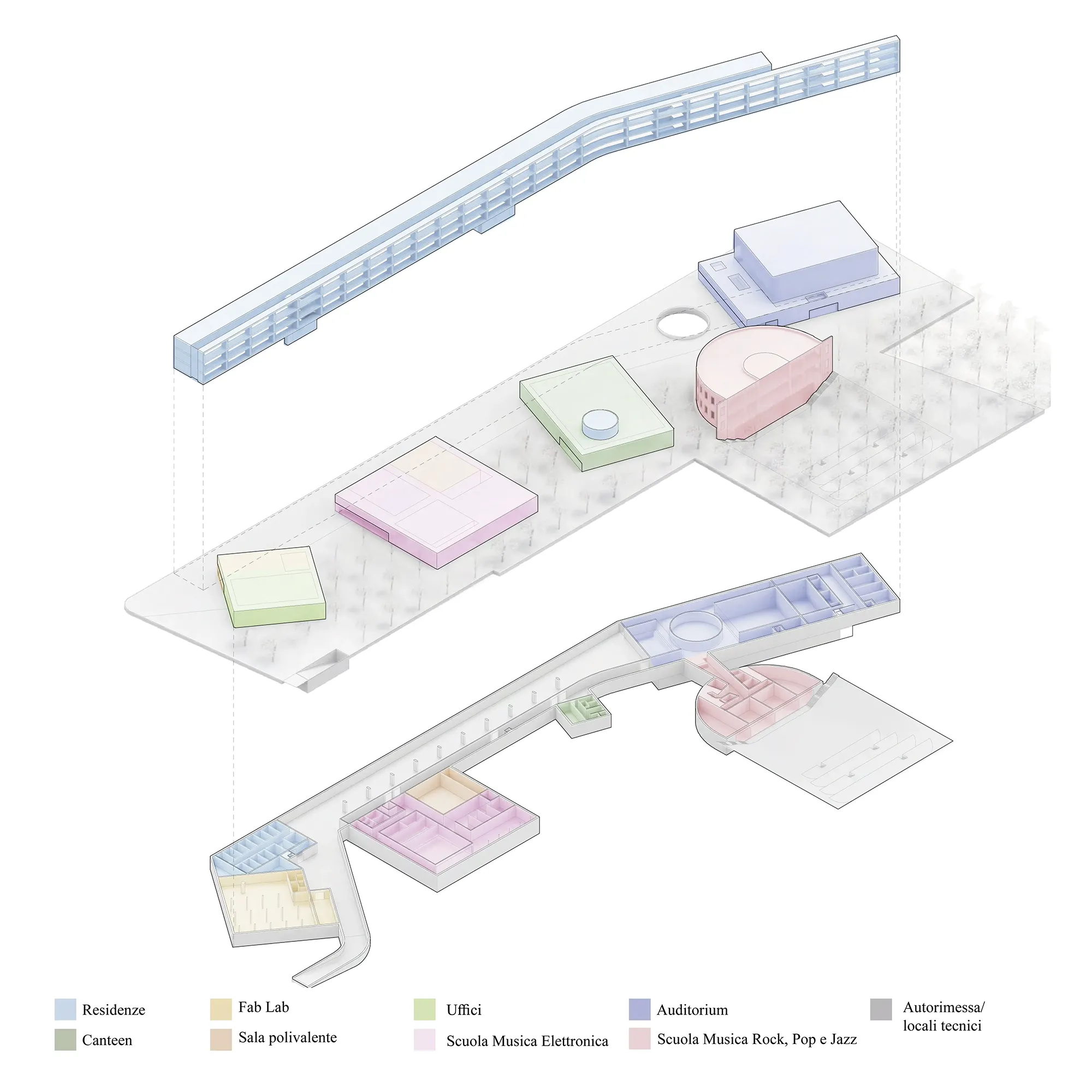
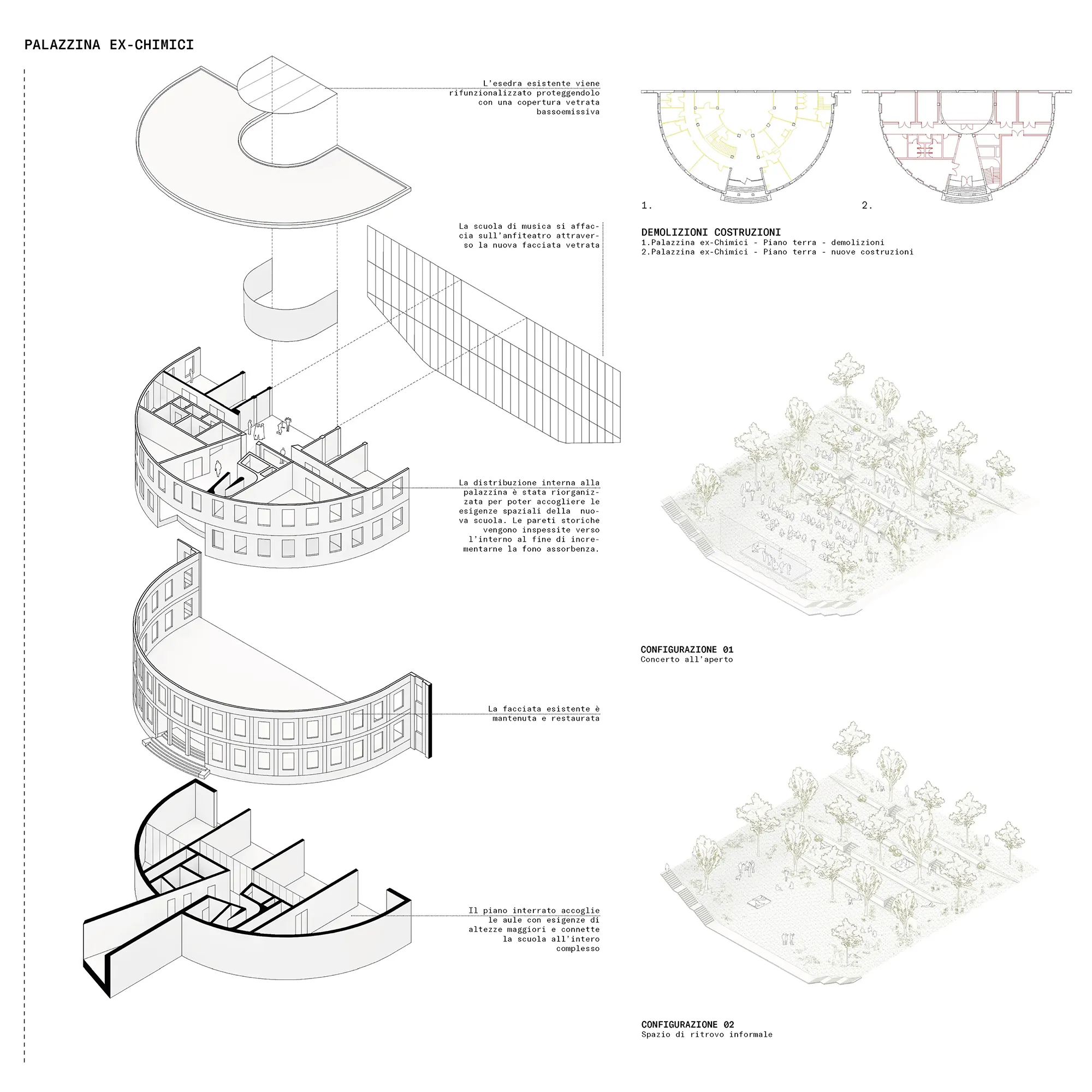
The design guidelines set out an ambitious programme involving the realisation of a multifunctional structure and the redevelopment of a former industrial building within a public green space, as the new home for the Electronic, Jazz and Popular Music Schools.
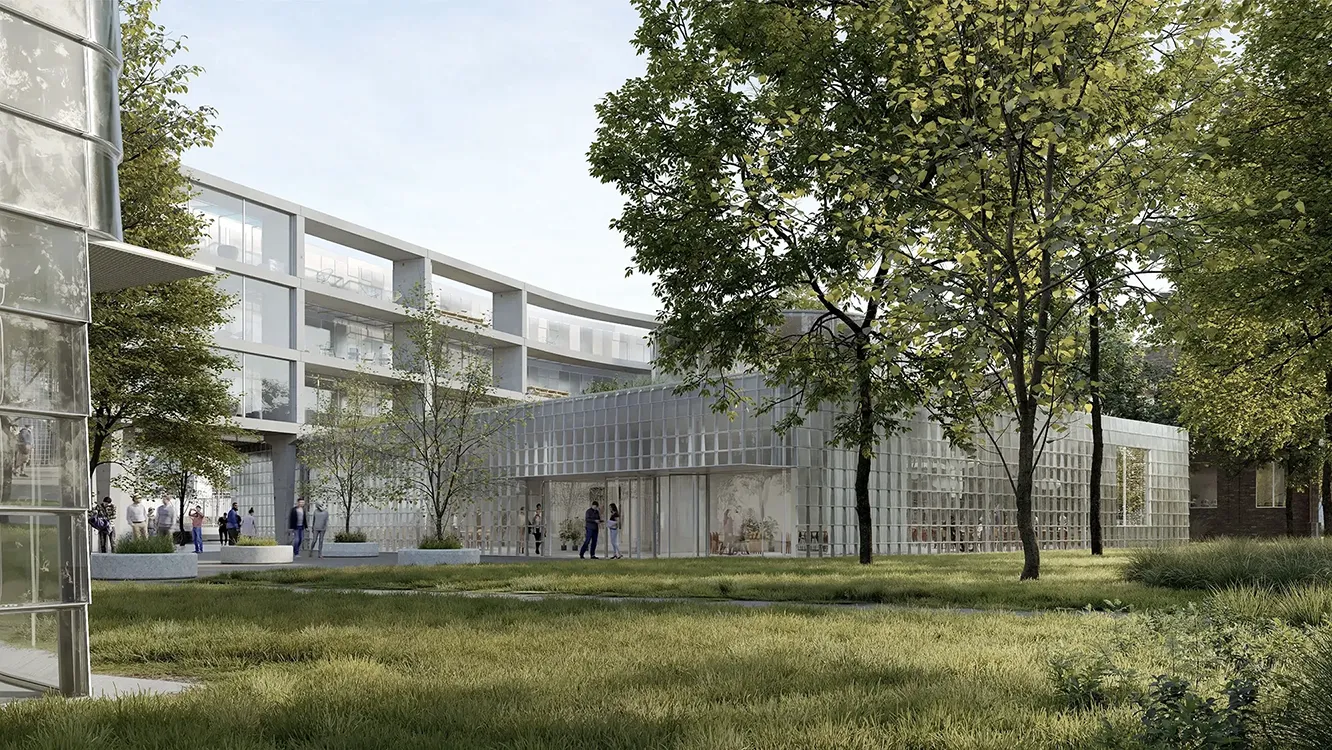
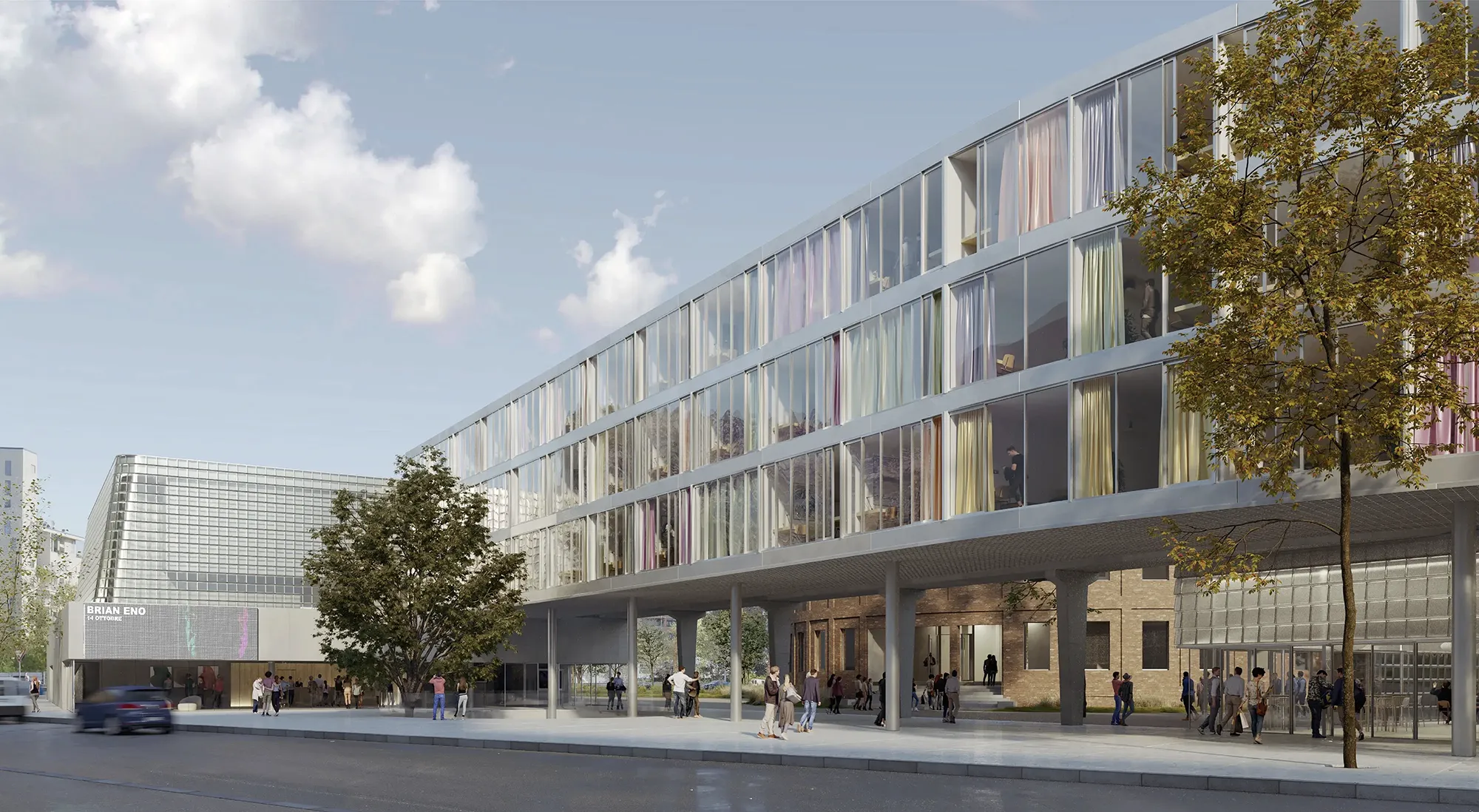
Our project proposal is based on the concept of an open and sustainable city in which society and academia merge seamlessly. The campus boasts a distinctive layout featuring widespread pavilions designed as luminous lanterns, connected through a public park with a dense canopy of trees.
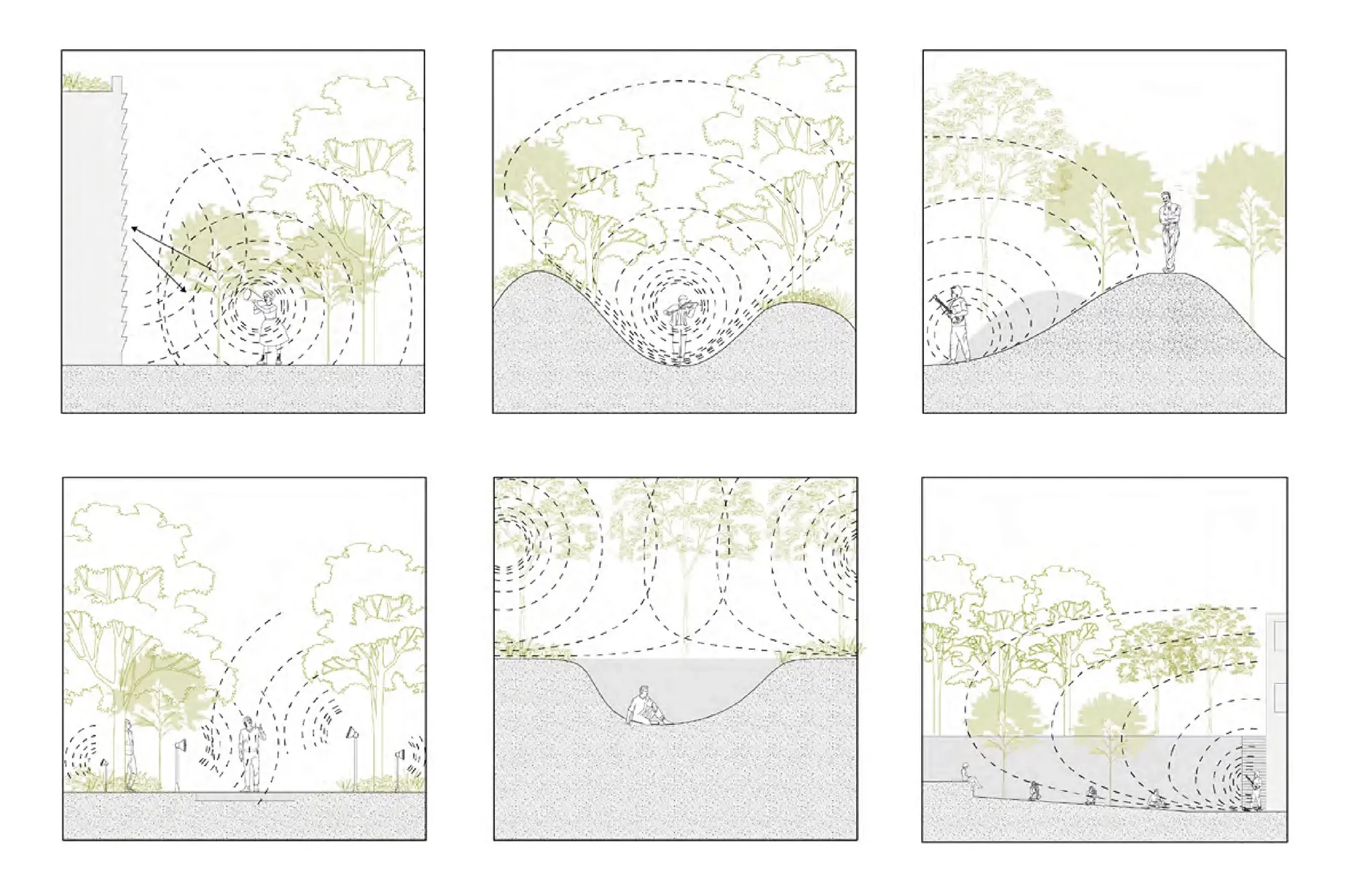
Multidisciplinary planning was at the core of the park’s conceptual framework, integrating the soundscape approach to emphasise the role of sound as an integral element of the landscape. A large natural amphitheatre is implemented in front of the building. The excavated soil is used to create a landscape of small-scale topographical variations that enrich the park, offering different acoustic experiences and helping to shield urban noise.
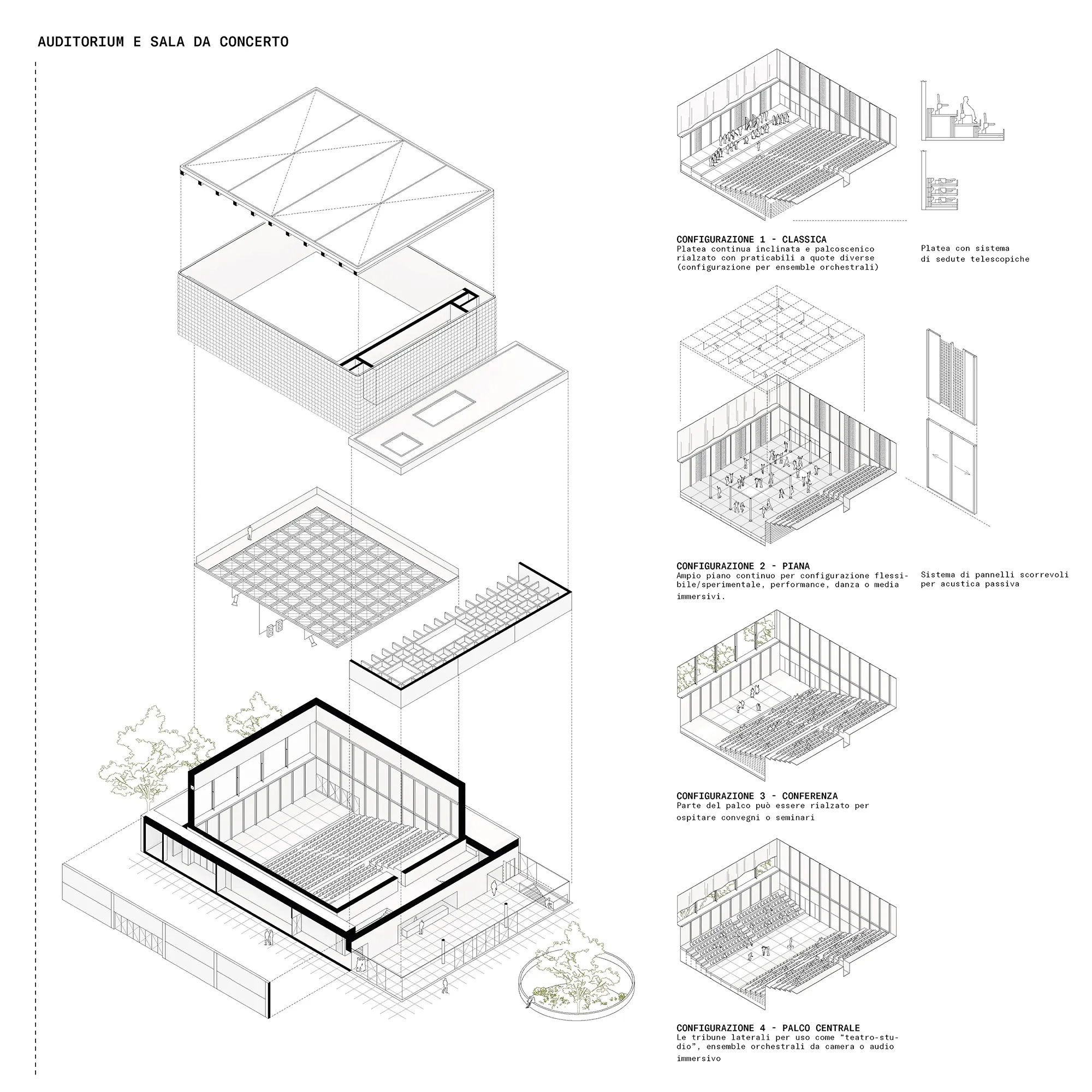
The 400-seat concert hall, with its iridescent shell, opens onto the main square of the complex, representing its more urban face. Designed as a technological and flexible space, the venue features variable acoustics, a reconfigurable stage and seating risers to accommodate a wide range of performances, from orchestra to experimental.
The multipurpose hall for the Electronic Music School has been designed as a state-of-the-art laboratory-studio. Optimised for amplified music, it can be adapted to accommodate an acoustic ensemble thanks to removable acoustic panelling. The facility is equipped with rigging grids at various heights that can be fitted with speakers and screens, making it a technologically advanced environment dedicated to experimentation in the field of immersive media (3D audio, 360° video, interactivity).